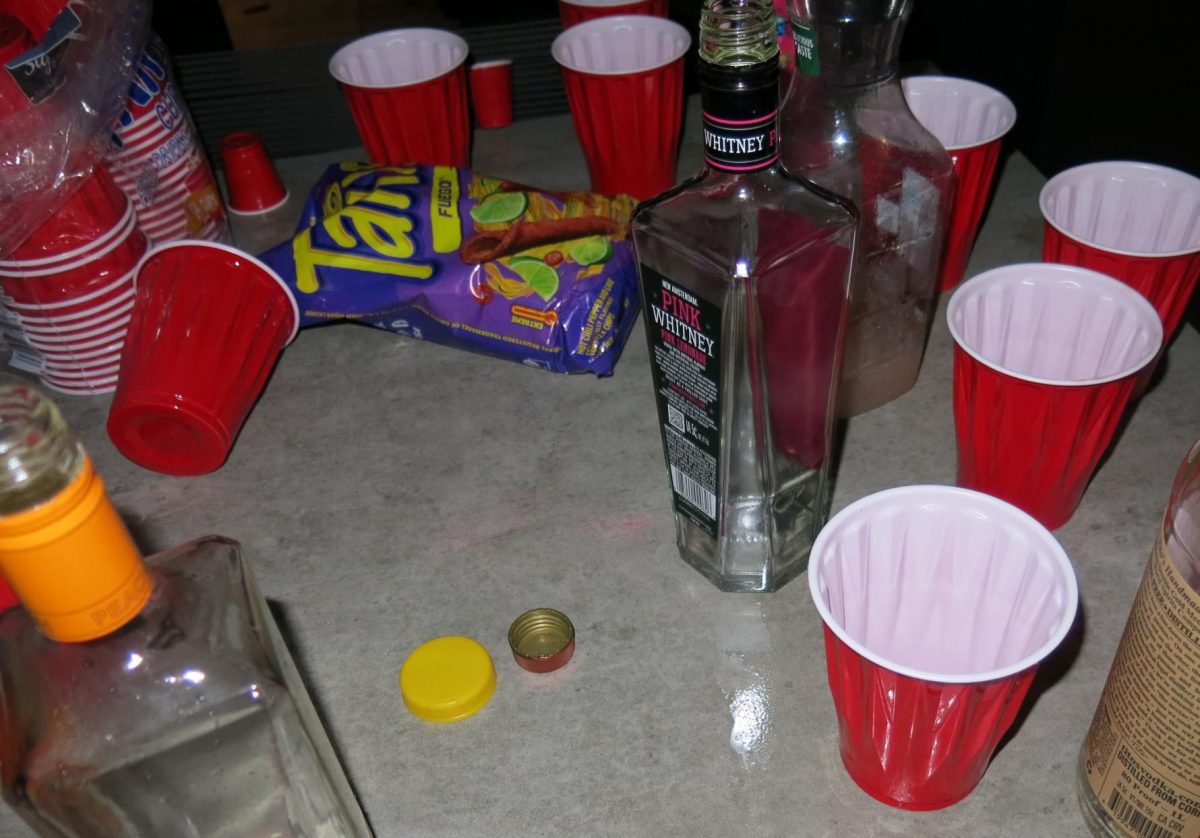
A law-abiding American can drink their first sip of alcohol at 21, while, according to the World Health Organization, more than 60% of countries worldwide have a drinking age of 18. So why are we so far from the norm?
John McCardell, historian and emeritus president of Middlebury College, says the 21-year-old minimum legal drinking age (MLDA) is harmful because it is frequently broken without consequence, setting a concerning precedent.
“On college campuses, students have figured out how to circumvent it and administrators have figured out how to cope with it, in some cases, by just looking the other way,” McCardell said. ”If a law exists that is being routinely violated, where does the logic that leads to that violation end?”
McCardell led an effort to relax restrictions on alcohol in the early 2000s when he started the Amethyst Initiative, garnering the support of 135 college and university presidents. The Amethyst Initiative went to Congress in 2008, asking Congress to reconsider the bill that has maintained an MLDA of 21 years old across the U.S. since 1984.
Before the National Minimum Drinking Age Act of 1984, the MLDA varied from 18 to 21 across states. This act stated that any state with an MLDA lower than 21 would receive a 10% cut to its federal highway funding and resulted in uniform restrictions across the nation.
According to McCardell, the hearings were never held because of the economic depression in 2008.
McCardell says this bill was created largely due to Mothers Against Drunk Driving (MADD), a nonprofit organization that campaigned for a higher drinking age on a platform of public safety.
“MADD is a pretty powerful organization,” McCardell said. “There continues to be this understandable emotional appeal that MADD makes that the drinking age is responsible for alcohol related traffic fatalities.”
However, McCardell says the higher drinking age has had unintended consequences.
“Drinking didn’t really subside [after the MLDA was raised],” McCardell said. “It retreated into dark corners and clandestine locations — places where it could not be very easily observed, never mind policed.”
According to McCardell, the standardization of a higher drinking age made alcohol taboo, which has had significant health repercussions.
“It eroded opportunities for young people in the presence of adults to learn how to consume alcohol responsibly,” McCardell said. “Clandestine binge drinking became a much more serious problem.”
McCardell says enforceable restrictions that promote education in a system similar to that of driver’s licensing would be more effective than the current MLDA.
“In order to be permitted to drink at age 18, you would have to take an alcohol education course, just like driver’s ed,” McCardell said. “If you pass that successfully, you would receive a permit, which could be revoked automatically if you were caught driving under the influence, and then you’d have to wait until you were 21.”
McCardell claims this revised system would encourage both respect for the law and responsible behavior.
“There would be an incentive for young people to behave up until they turn 18, a greater incentive to behave once they got their permit and an immediate penalty for anyone who violated the rules under any circumstances,” McCardell said.
Palo Alto High School Junior Zoe Ferring compares America’s MLDA to restrictions in other countries.
“It’s not consistent with the rest of the world, where most countries have their drinking age at 18,” Ferring said. “It’s better that individuals can drink legally and safely instead of trying to do it under the radar.”
According to the European Union Agency for Fundamental Rights, the majority of European countries have an MLDA of 18 years old.
Ralph Castro, director of Stanford’s Office of Substance Use Programs, Education & Resources, says the culture in Europe allows its lower drinking age to succeed.
“In France and in Italy, alcohol is more culturally family-centric and it’s introduced in a family structure early on … which is different than it is here in the United States,” Castro said. “We tend to be a much more binge-drinking focused society.”
Castro says there are also infrastructural differences that allow lower drinking ages to succeed in Europe.
“There are fewer opportunities to drive [and] there are more walkable cities,” Castro said. ”There’s a more protective factor involved.”
Castro also emphasizes the importance of education, saying that discussions with young people allow them to make better choices.
“We underestimate the brains of young people quite a bit,” Castro said. “There are ways to have conversations with people to build resilience, to build flourishing skills, [and] to build critical thinking skills.”
Castro says that open dialogue is more effective than fear-mongering when discussing underage drinking with teenagers.
“Too many times we’ve utilized scare tactics and unreliable research methodology to try to cajole teens into not drinking,” Castro said. “We need to empower young people to think critically about why they’re using.”
Paly Junior Dalia Saal says that preventing 18-year-olds from drinking contradicts their status as legal adults, since they can serve in the military and on juries, sign contracts and vote.
“It’s inconsistent with so many other rights you get,” Saal said. “When you’re not allowed to do something, there’s a rebellious side of you that really wants to do it.”
Castro advises caution when comparing these rights.
“Those aren’t true correlaries,” Castro said. “They are false dichotomies. Drinking and voting are not necessarily the same thing. You have to think strategically: Why? Why would you want it lower?”
This sentiment is shared by Aliya Benabou, the Bay Area program specialist at MADD.
Benabou, who manages local programs at MADD and gives presentations to middle and high schoolers, says it is important to educate young people about the dangers of alcohol.
“A lot of people don’t know … the dangers of drinking underage and what kind of health implications that causes that carry into adulthood,” Benabou said. “I wish they [teenagers] knew that alcohol was not a toy. It can get bad really fast.”
Benabou is especially aware of the risks of alcohol use because of her frequent interaction with people who are the most affected by drunk driving accidents.
“I see everyone who has lasting injuries, [who] can’t drive anymore, is paralyzed on their right side or doesn’t have a mom and a dad,” Benabou said. “I see that and I work with them and I know them.”
Because of her experience, Benabou believes that a lower MLDA would only create more harm.
“I think it [efforts to lower the MLDA] just stems back to being ignorant,” Benabou said. ”It’s just because they haven’t been impacted. Because, if they have, why would they want to do that? What good is going to come out of that?”