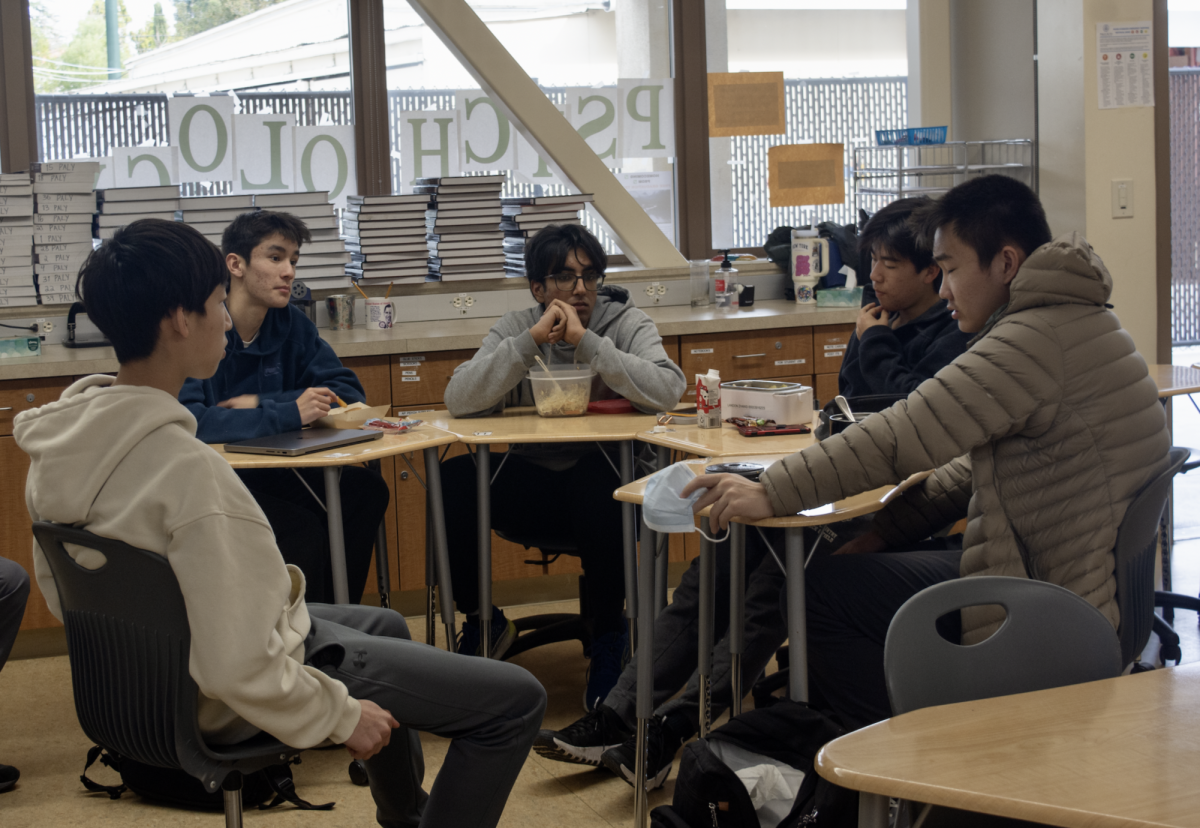
Palo Alto High School’s Eco Club encourages students’ involvement in climate conservation. Meeting during lunch on alternating Tuesdays in Room 806, the club focuses on its current project, the Climate Progress Center, a website featuring expert interviews and accurate climate data. Through this site, members hope to help students connect their passions to careers.
According to the club’s co-presidents, Paly juniors Aiden Miao and Agastya Parikh, they plan to continue expanding the website through the rest of the year and over the summer.
“A main part of the website is to help students discover ways that their passions, majors and careers can be applied to fight climate change,” Miao said. “Our goal is for each featured major to be paired with expert insights. It’s been a great way to personally learn about more areas of climate change and meet some really cool people.”
Miao also says the website will combat climate anxiety, inspire action and show accurate global progress.
“There are a lot of confusing narratives in the media about climate change,” Miao said. “We hear simultaneously about positive and negative climate news, and it can be very confusing. Although practically millions of people care about climate change, very few know how much progress the world has actually made against it. We’ve gotten permission from Project Drawdown, a world leader in climate solution data, to use their data to try to demonstrate progress.”
Besides recent virtual projects, Eco Club has been helping the school be more environmentally friendly for over 10 years.
“One of the projects we did a couple of years ago was to help electrify the school buses,” Miao said. “The school buses you see in the parking lot are electric. … Paly Eco was part of the group that petitioned for that. We try to do a lot of things that make real change at Paly.”
Eco club also hopes to connect with students through their upcoming exposition on Paly’s campus.
“We’re planning an exposition for Earth day where we’re inviting organizations including Paly clubs to host tables at the Quad,” Parikh said. “We’ll bring local and student climate organizations to table so that Paly students can join them and learn about what’s going on locally to fight climate change.”
Club member Ryan Saket also encourages students to take more personal responsibility regarding the climate.
“An individual who, for example, takes shorter showers or doesn’t drive as much to conserve their energy, does not make a huge difference,” Saket said. “The big difference is [made] when a lot of people collectively do it.”
According to Parikh, it’s these students’ daily, individual climate awareness that is the most important part of conservation.
“There are a lot of things that people do as part of their daily life when they do not realize the impacts they have,” Parikh said. “If you know what impacts it has, you can minimize your effects on the planet.