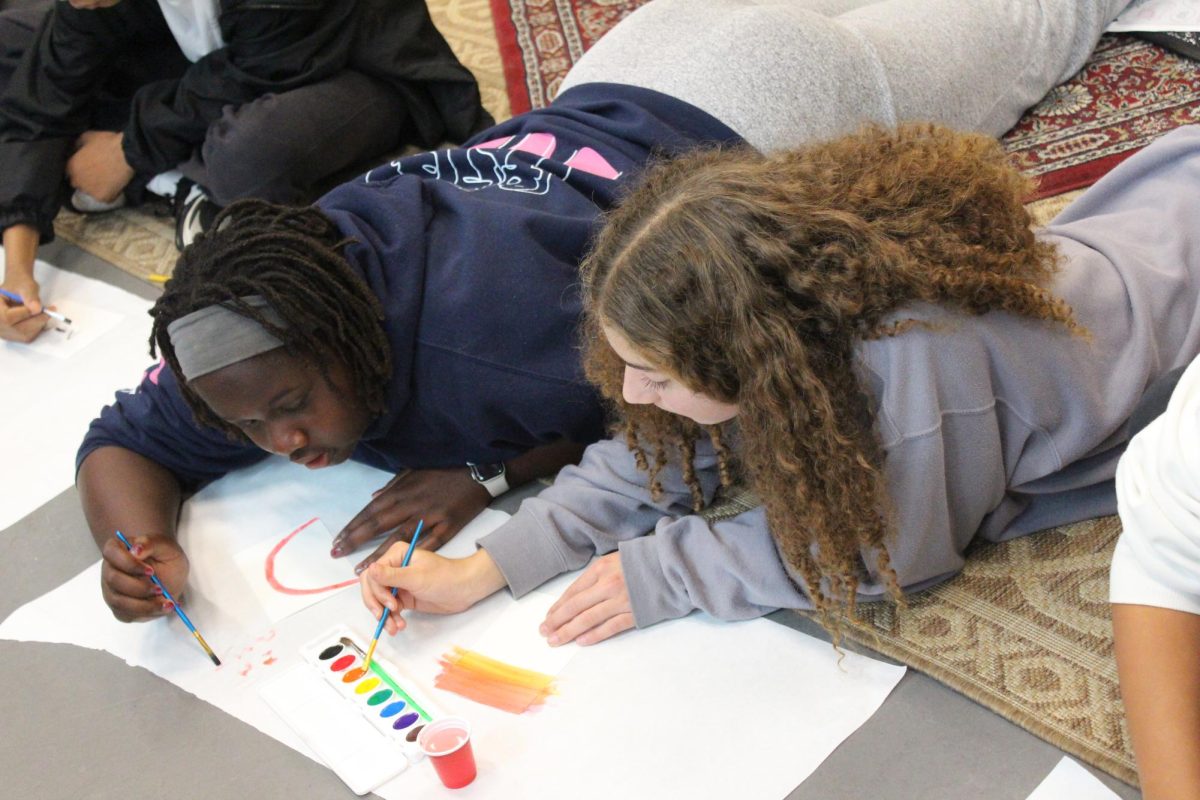
Bekki Casalco, Paly’s English teacher, is one of the many teachers who taught 9th grade standard curriculum in Palo Alto High School. Though she is the only teacher who has made revolutionary steps in integrating wellness into literacy, aiming to improve students’ agency.
During her time in teaching her freshman English class, Casalco recognized that stigma is a barrier that keeps students from seeking help.
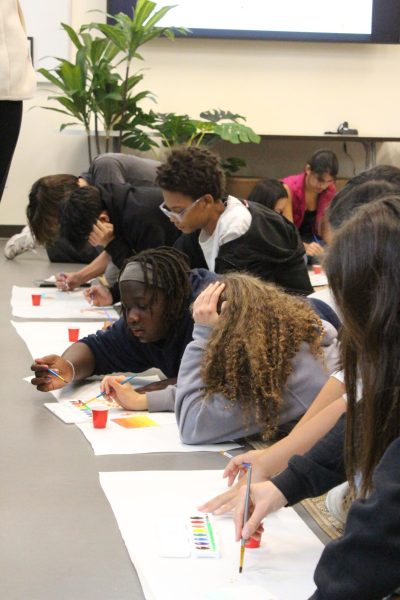
“From my experience, I think it [a barrier] will be the stigma,” Casalco said. “Like if you reach out for help, you are deemed as weak, or ‘only crazy people get help in the wellness center’, and the last one is a quote from one of my students when we asked them why they think we’re [wellness workers are] here.”
Casalco made an effort to partner with the Paly Wellness Center to lower the barrier. The partnership works on a collaborative model. Casalco meets with Wellness workers to brainstorm how the themes of each of the novels she teaches can be linked to the resources available at the wellness center.
“We work together, we brainstorm,” Casalco said. “[…]I tell them [Wellness workers] the key things that we’re focusing on in the book, and the key things that are relevant to them and what I hope the students take away from the book. Then we brainstorm and put everything together.”
The program weaves social-emotional learning directly into the standard 9th-grade English curriculum by using literature as a bridge to real-world challenges. The goal is to provide students with tangible tools to navigate complex situations.
“The idea is to equip students with social-emotional tools, where they will be able to use those tools in their real life to combat these situations,” Casalco said. “When we come across our characters and our novels, most of the situations are relatable.”
Moving beyond the standard curriculum of reading and writing, Casalco’s distinctive approach aims to empower students, enhancing their confidence, and problem-solving skills to endure diverse scenarios in life.
“The goal is to get them [students] from being spectators or just passively a passive engagement to active engagement,” Casalco said. “It’s also about promoting student agency.”
Casalco believes that the best time to provide students with the necessary tools to approach problems is during school.
“I have always believed that students need to know how to navigate life,” Casalco said. “And school is the perfect place because all these resources are free. Once you become an adult, a lot of these resources you need to pay for.”
Casalco said that the first activity that the students participated in was taking a tour inside the Wellness center and getting to know the resources the center offers.
“We’ve only had one activity so far,” Casalco said. “We’re planning for a second one, which is coming up in two weeks. So our first one [event], is an introduction to the wellness center. They got a tour of the wellness center, and they got to explore the therapy spaces.”
It’s not common for classes to focus on mitigating the barrier in asking for help or to spend time discussing available resources around campus, but Casalco’s action aims to change that.
“It’s so easy just to talk about it and do it alone,” Casalco said. “But the idea that a teacher and a center are collaborating on not just English topics, but also on the social emotional piece of it. So it’s equipping students to become active agents of their own life and taking control of how they respond or how they react to situations in life.”
In increasing the agency of her students, Casalco noted that the network effect of how those students affect their friends can be effective in spreading its impacts.
“Friends talk to each other, and they share personal things,” Casalco said. “So they can be like, ‘hey, that’s a situation, why don’t you go to the wellness center?’ And I think that’s something that would be a huge win if we get more and more students participating in the wellness center and be part of it.”