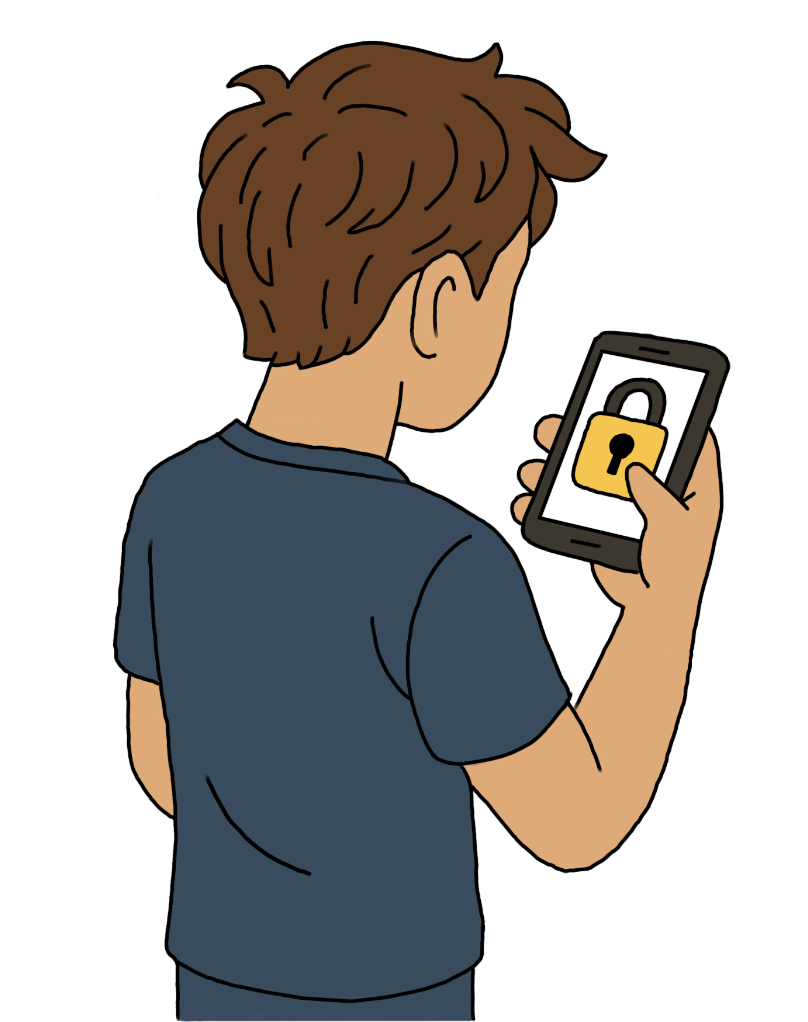
For most Palo Alto High School students, phones are a part of everyday life. They’re calendars, calculators, cameras, and most importantly, communication. However, school administrators often seem to see them as nothing but a distraction.
To address this concern, California Gov. Gavin Newsom’s Phone-Free School Act requires schools to enact a policy limiting cell phone use in classrooms by July 1. However, the act states that the individual policies are up to the judgment of respective school districts.
At the beginning of the school year, the Palo Alto Unified school board hadn’t made a decision, and so the choice was left to each school. The board held a meeting in November to decide what the PAUSD-wide policy should be for high schools, and they decided to keep the classroom-only phone ban that was already in effect at Palo Alto High School.
We believe the PAUSD school board made the right decision. While having phone-less classrooms can increase focus and improve learning, there is no need for an entirely phone-less school day. In fact, we believe a bell-to-bell phone ban would have more negative than positive effects.
Despite the proposed idea that removing phones in schools boosts mental health, the evidence doesn’t back it up. A major study in 2025 from the University of Birmingham found that schools with a strict, full-day smartphone ban showed no improvement in students’ mental health, physical activity, sleep, or academic performance.
Confiscating phones won’t magically make students happier or more focused. Teens’ mental health and productivity are shaped by many more factors, such as family and social life, not just the amount of time kids spend on screens. Especially at Paly, where the pressure is already high, banning phones will make students dread school even more, increasing burnout.
Many teachers believe that banning phones will automatically make students more productive, saying that fewer distractions will mean better focus. While that may sound logical, a 2023 Common Sense Media study showed that teens only used their phones for a median of 43 minutes in school compared to almost four and a half hours daily, showing that most teens’ excessive phone use is outside of school.
Instead of targeting limited in-school use, districts such as PAUSD could make a bigger impact by teaching responsible phone habits outside of class, where the majority of use actually happens.
Another major flaw in bell-to-bell phone bans is how they cut off communication. This is especially important during emergencies such as lockdowns, where the ability to contact a parent is a necessity. According to a National Parents Union poll, 78% of parents believe their child should be able to use their phone during school hours if there is an emergency and they need to contact their kids. Having phones available doesn’t mean they must be used in class, but students should be able to have the option of using their phones in case of an emergency.
In addition to extreme cases, communication through technology is fundamental to how society functions today. Many Paly students go off campus to Town and Country Village during brunch and lunch, and students should be able to call and coordinate with their friends.
A full-day phone ban also raises many questions and concerns. How will the administration take care of 2,000 phones? What about people with health issues? What about people with prep periods who are leaving school? These issues are easily avoided with a classroom-only phone ban.
Even when schools are able to enforce a total phone ban successfully, new problems emerge. A 2025 National Bureau of Economic Research study analyzing Florida districts found that the first year after the phone ban was put in place, schools saw an increase in student suspensions due to rebellion against the policy. Instead of focusing on teaching, educators would be managing discipline, damaging the very relationship that makes learning possible.
High school should be a place where students are being prepared for adult life. Locking their phones away will do the exact opposite. Post-high school, there’s no one stopping people from using their phones. Not teaching students how to use their phones responsibly at a younger age will lead to more phone abuse in the future.
Administrators can also emphasize the importance of using phones responsibly through education rather than discipline. The best way to fight this isn’t with total abolishment, it is with education instead.
At Paly, where independence and initiative define the student body, the solution isn’t to lock phones away. It’s to build trust and teach balance, creating a campus that values both focus and freedom, which is why the school board made the right decision.